Advancing a culture of solidarity at the intersection of labour and art in Mi’kma’ki.
At Mayworks Kjipuktuk/Halifax, we:
- Foster the political nature of artistic work
- Promote works of art that celebrate a diverse and complex working class
- Draw correlations between struggles that point toward a better future for all!
We do this through our annual Festival of Working People & the Arts in May and through our off-season Mayworks Momentum programming.
May Day & Mayworks Festivals
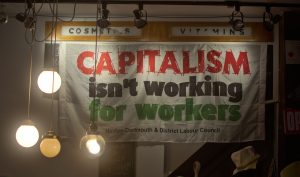
May 1st is marked throughout the world as International Workers’ Day, or May Day. A day when the workers of the world take to the streets in every major city around the globe demanding justice, fairness and dignity for all. In North America, May Day has not been as prominent as it is in other parts of the world, but it is still celebrated in most major cities with a variety of political and community actions. However, May Day isn’t simply a celebration of labour. It is a rallying call against our current economic system, a public declaration that “Capitalism Isn’t Working For Workers,” and an affirmation that a better world is possible.
One of the ways various labour councils and unions mark May Day is through the Mayworks Festival. Mayworks was originally conceived in 1986 by the Toronto and York District Labour Council and the idea has since spread to many cities across the country. The goal behind Mayworks is to bring workers and artists together and to use art to explore themes of justice, solidarity and liberation. Art has always been an important way of expressing political statements and Mayworks continues in a long tradition of building bonds of solidarity between artists and labour organizations.
The first annual Mayworks Halifax festival took place in 2009 thanks to the organizing efforts of the Halifax-Dartmouth & District Labour Council. Our festival has since grown from year to year and has now become Nova Scotia’s largest social justice themed cultural event. Annually, our festival attracts hundreds of diverse audience members who take interest in issues of social, economic and environmental justice.
Find out more about the historical relationship between May Day and the arts by checking out our digital flyer below.